Sour Kimchi #1: Being unaware of foreign exchange reporting requirements under Korean law

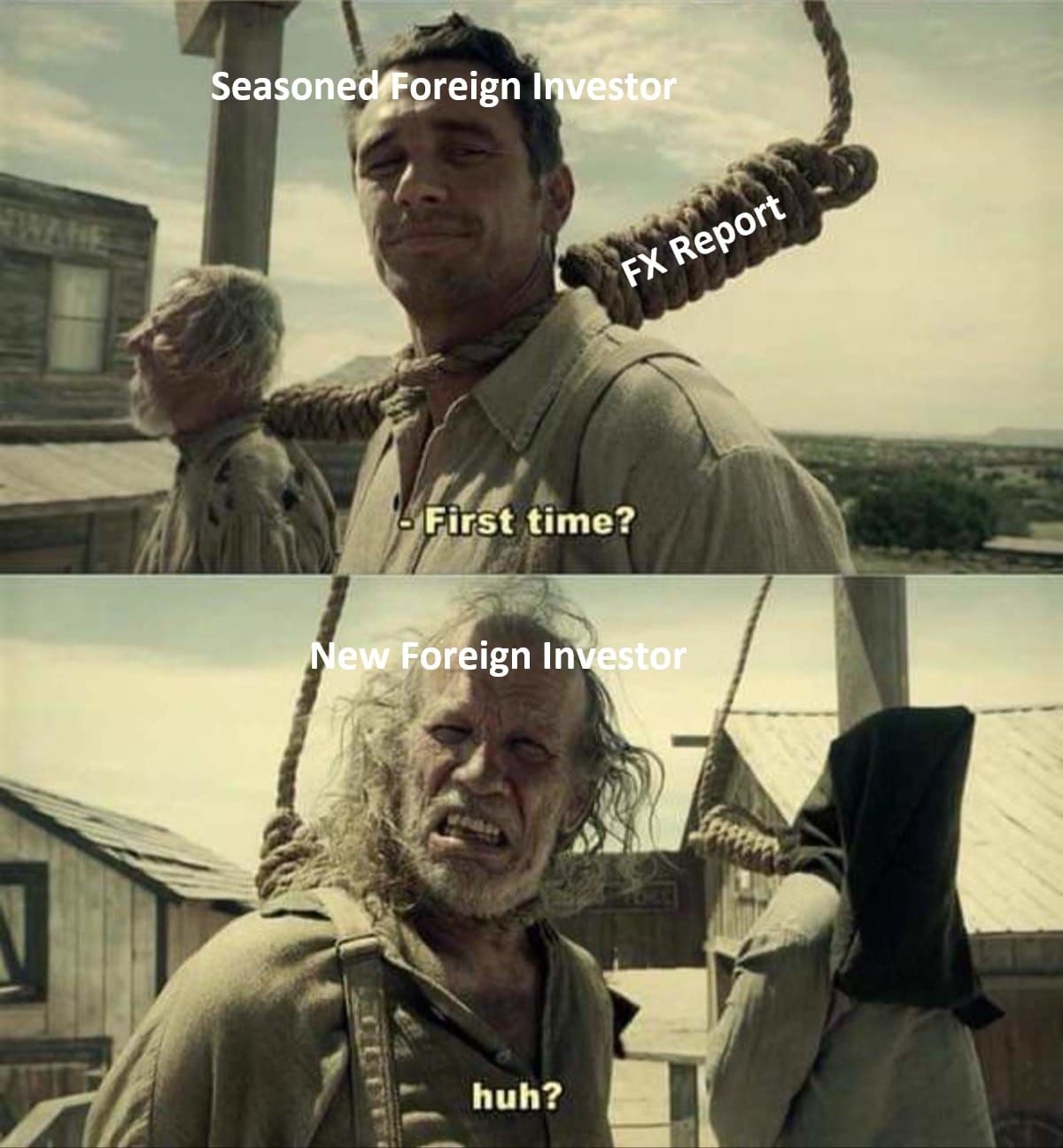
By: Daniel Chong and Seungki Jung
Client: Hi. We are looking to close a $5M investment in a Korean target today. The contract is already signed.
Me: Great! Did you file a foreign exchange report?
Client: What’s that?
Me (already worried): It’s a report you file with a Korean bank before acquiring shares in a Korean company pursuant to Korean foreign exchange regulations.
Client: No, we haven’t done that... What happens if we don’t file?
Me: Then the target can’t receive your wire, which means today’s closing will need to be postponed.
Client: That’s not good. The company told us that all investors who fail to wire funds by today will be excluded from the Shareholders’ Agreement.
Me: Let’s talk to the company…
Welcome to the SOUR KIMCHI BLOG SERIES, where we cover simple, avoidable mistakes that could sour your Korean cross-border deal, inspired by our own war stories in getting these deals through. In this blog, we try to keep things as plain as possible (while poking fun at ourselves in the process). Feel free to reach out to us if you have any questions.
Bottom line: South Korea still has capital controls, so generally speaking (with some exceptions), any cross-border securities or loan transaction will require some type of report be filed with a Korean bank (a.k.a. “’foreign exchange report” or “FX report” for short). Failure to file will result in the target’s bank blocking the funds until they confirm that the report is filed and cleared, which means your deal could end up like the story we shared above.
So what is an FX report?
It is essentially a one-page document that is submitted to a bank in Korea reporting the key terms of the transaction, which includes various attachments (including a copy of the transaction document). The bank also conducts a KYC/AML check on the filer and transaction, which means the filer will need to attach various identity verification documents to the FX report, as well. The processing time vastly differs depending on which bank processes the filing. Some banks might take 1-2 business days for a routine filing while others might take weeks, which brings us to our next topic.
The unfortunate reality of foreign exchange reporting practice in Korea
Most major banks in Korea are legally eligible to process FX reports, but being eligible does not equal being capable. You would think that Korean banks routinely engaging in cross-border transactions would mean that all Korean banks would be familiar with handling FX reports. Unfortunately, that is not the case. We can literally count on one hand the number of bank branches that can competently handle an FX report. Why is that?
Based on what we’ve heard from bank insiders, banks do not provide formal training to bank employees on FX reporting. Instead, bankers often process these while learning on the job. I’m sure you can guess how that well that goes. Bank tellers are busy enough as it is working their shift, so imagine having to stop everything you are doing to learn something completely new while being on the phone with HQ multiple times to figure out how to process one FX report, which, by the way, unless the reportable transaction involves a currency exchange, the bank earns no fees for processing. This is why banks (and especially the bank tellers) often have no incentive to take on the FX work and might actively point you to take your report elsewhere.
The same is true for law firms, as well. Not all law firms are equipped to handle FX work. We can count on one hand the number of firms that can competently handle FX matters. Why is that?
For starters, foreign exchange regulations are a labyrinth with general (sometimes vague or ambiguous) rules, exceptions, and exceptions to the exceptions. Couple that with the varying policies and practices among the different banks in interpreting and enforcing FX laws and you have yourself a tangled regulatory mess. So imagine trying to unravel all of that just so that you can push administrative paperwork at a bank. This is why even lawyers typically try to avoid FX reporting work and why most of the largest firms in the country have a separate FX team composed of senior advisors (i.e., non-lawyers) from the big banks with expertise in this area. It makes sense: it is simply much more efficient to outsource FX work to the FX team. Of course, the fundamental issue with that approach is that it makes a Korean lawyer specializing in FX laws that much rarer.
Why not do it myself?
You certainly could if you wanted to spend the time to figure out how your transaction is characterized under FX regulations, what FX report type applies to your transaction, what documents you need to prepare, and make an in-person visit to a Korean bank to submit the report. But who has time for that?
So what should I do?
Start early. Once you identify that your transaction is a Korean cross-border securities or loan transaction, hire an FX lawyer to review the transaction structure and get notarized and apostilled POAs done well ahead of closing (we will cover apostilled POAs in a separate article).
Thanks for reading!
Who are we?
MISSION Law is a Korean law firm specializing in cross-border transactions. We seek to be a bridge between Korea, the U.S., and other markets to help the Korean startup ecosystem expand globally.

Daniel Chong, Senior Foreign Attorney
Daniel Chong is a U.S. attorney with over a decade of experience in Korean cross-border transactions, including venture investments, M&As, joint ventures, company formations and reorganizations, and other strategic transactions. He advises startups, VC firms, and multi-national corporations based in Korea, the U.S., Japan, Singapore, Hong Kong, New Zealand, and other countries in their cross-border transactions, securities, and general corporate matters. He has handled hundreds of FX reporting matters.

Seungki Jung, Senior Attorney
Seungki Jung is a reputable Korean FX law expert having handled thousands of FX reporting matters. He served several years as in-house counsel at the Bank of Korea (Korea’s central bank), where he experienced a wide range of reportable transactions. He advises investors, funds, and companies in their FX regulatory and general corporate matters. His unique expertise gives him the rare ability to structure transactions to be FX compliant.
The information provided in this article is for general informational purposes only and does not constitute legal advice. Viewing this content, reading blog posts, or submitting a message through a contact form does not create an attorney-client relationship between you and our firm. Nothing herein should be relied upon or used without consulting a lawyer to consider your specific circumstances, possible changes to applicable laws, rules and regulations and other legal issues.